

If you’re entering the world of cryptocurrency mining in 2025, understanding hashrate is absolutely fundamental. This single metric influences everything from your equipment selection to daily profitability calculations. Yet many beginners overlook its importance, focusing exclusively on initial hardware costs without grasping how hashrate determines long-term mining success.
This comprehensive guide demystifies hashrate—what it is, how it’s measured, why it matters, and how to optimize it for maximum profitability in today’s competitive mining environment.
What Is Hashrate?
Hashrate represents the computational power your mining hardware uses to solve the complex mathematical problems that secure cryptocurrency networks. Think of it as the speed at which your equipment can make guesses to find the correct answer to a cryptographic puzzle.
Technical Definition: Hashrate measures the number of hash calculations your mining equipment can perform per second. Each hash is an attempt to find a specific value that, when combined with transaction data, produces a result meeting the network’s difficulty requirements.
When you mine Bitcoin, for example, your ASIC miner repeatedly hashes block header data combined with a random number (called a nonce) until it finds a hash value below the target difficulty. The faster you can compute these hashes—the higher your hashrate—the more chances you have to find a valid block and earn rewards.
The Mining Race Analogy
Understanding hashrate becomes clearer through analogy:
Imagine a lottery where winning numbers are drawn every 10 minutes. Your hashrate represents how many lottery tickets you can generate per second. A miner with 100 terahashes per second (TH/s) generates 100 trillion guesses every second, while a miner with 50 TH/s generates only half as many.
The cryptocurrency network adjusts difficulty so that regardless of total network hashrate, blocks are found at consistent intervals (10 minutes for Bitcoin). As more miners join or existing miners upgrade equipment, the puzzle becomes harder, requiring more computational guesses to solve.
Hashrate Measurement Units
Hashrate scales across enormous ranges, from individual devices to entire global networks. Understanding these measurement units is essential for comparing equipment and calculating profitability.
Standard Hashrate Units
H/s (Hashes per Second): The base unit—one hash calculation per second. Modern mining equipment operates millions or billions of times faster than this base rate.
KH/s (Kilohashes per Second): 1,000 hashes per second. Early CPU mining operated in this range, now obsolete for most major cryptocurrencies.
MH/s (Megahashes per Second): 1,000,000 hashes per second. The Goldshell Mini-DOGE Pro operates at 205 MH/s when mining Litecoin or Dogecoin using the Scrypt algorithm.
GH/s (Gigahashes per Second): 1,000,000,000 hashes per second. Intermediate-level ASIC miners operate in this range for certain algorithms.
TH/s (Terahashes per Second): 1,000,000,000,000 hashes per second. Modern Bitcoin ASIC miners operate in this range. The Antminer S19 XP produces 140 TH/s.
PH/s (Petahashes per Second): 1,000,000,000,000,000 hashes per second. Used to measure large mining operations or entire mining pools.
EH/s (Exahashes per Second): 1,000,000,000,000,000,000 hashes per second. The Bitcoin network’s total hashrate is measured in hundreds of EH/s—representing the combined power of all Bitcoin miners globally.

Context: Network Hashrate Scale
As of 2025, the Bitcoin network operates at approximately 600-700 EH/s of total computing power. To put this in perspective:
- A single Antminer S19 XP at 140 TH/s represents 0.00000002% of Bitcoin’s total network hashrate
- You would need approximately 5 million S19 XP miners to equal the entire Bitcoin network’s computing power
- The network’s hashrate has increased over 100,000% since 2015
This massive scale explains why solo mining (mining independently without joining a pool) has become virtually impossible for individual miners—your chances of finding a block before others are infinitesimally small.
Why Hashrate Matters for Miners
Your hashrate directly determines three critical aspects of mining success:
1. Probability of Finding Blocks
Higher hashrate means more attempts per second to solve the cryptographic puzzle. In a mining pool, your share of rewards is proportional to your contributed hashrate:
Example Calculation:
- Your miner: 140 TH/s
- Pool total: 140,000 TH/s (140 PH/s)
- Your share: 140 ÷ 140,000 = 0.1% of all blocks found by the pool
When the pool successfully mines a block (earning 3.125 BTC in 2025, post-halving), you receive approximately 0.1% of the reward (minus pool fees), equal to 0.003125 BTC.
2. Profitability Calculations
Hashrate is the primary variable in determining mining profitability. The Mining Watchdog calculator uses hashrate along with power consumption, electricity costs, and current difficulty to project earnings.
Standard Profitability Formula:
Daily Revenue = (Your Hashrate ÷ Network Hashrate) × Daily Block Rewards × Coin Price
Daily Profit = Daily Revenue - (Power Consumption × Hours × Electricity Rate)
Understanding this relationship explains why Bitcoin mining profitability changed dramatically after the 2024 halving—block rewards cut in half while hashrate and difficulty continued increasing.
3. Competitive Positioning
As network hashrate increases, individual miners must upgrade equipment to maintain their relative share of rewards. A miner producing 100 TH/s in 2020 earned significantly more Bitcoin than the same 100 TH/s earns in 2025, because total network hashrate has increased dramatically.
This dynamic creates constant pressure to:
- Upgrade to more powerful equipment
- Optimize existing hardware efficiency
- Reduce operational costs (primarily electricity)
- Strategically time equipment investments
Miners who fail to keep pace with network hashrate growth see their relative earnings decline continuously, even if their hashrate remains constant.
Hashrate vs. Mining Difficulty: The Critical Relationship
Hashrate and mining difficulty are inextricably linked—understanding their relationship is essential for projecting long-term mining profitability.
How Difficulty Adjusts
Cryptocurrency networks use difficulty adjustments to maintain consistent block times regardless of total network hashrate:
Bitcoin’s Difficulty Adjustment:
- Occurs every 2,016 blocks (approximately every 2 weeks)
- Compares actual time to mine 2,016 blocks vs. expected time (20,160 minutes)
- If blocks came faster than expected: difficulty increases
- If blocks came slower: difficulty decreases
The adjustment formula ensures that as miners add more hashrate to the network, it becomes proportionally harder to find blocks, maintaining the 10-minute average block time.
The Hashrate Arms Race
This creates what miners call the “hashrate arms race”:
- New, more efficient mining equipment becomes available
- Miners upgrade to maintain competitiveness
- Total network hashrate increases
- Difficulty adjusts upward
- Mining the same amount of cryptocurrency requires more hashrate
- Cycle repeats
Real-World Impact:
In January 2020, Bitcoin’s network hashrate averaged around 120 EH/s. By November 2025, it exceeds 600 EH/s—a 5x increase. A miner with constant hashrate saw their relative share of Bitcoin rewards decrease by 80% over this period, purely due to network growth.
This explains why equipment that was highly profitable at purchase can become marginally profitable or even unprofitable within 12-24 months, despite producing the same hashrate.
Difficulty and Hardware Selection
When choosing mining equipment, you must consider not just current difficulty, but projected difficulty increases:
Conservative Planning Assumes:
- 3-5% monthly difficulty increases
- Equipment effectiveness declining 30-40% annually
- Need for replacement or supplementation within 2-3 years
Use calculators to model profitability scenarios with increasing difficulty. Equipment that appears profitable today may not remain so if difficulty grows faster than anticipated.
Hashrate Across Different Mining Algorithms
Different cryptocurrencies use different mining algorithms, each with distinct hashrate characteristics. Understanding these differences is crucial when selecting which cryptocurrency to mine.
SHA-256 (Bitcoin, Bitcoin Cash)
Characteristics:
- Measured in terahashes (TH/s) for individual miners
- Network hashrate in exahashes (EH/s)
- Dominated by ASIC hardware
- High barrier to entry (expensive equipment)
- Most competitive algorithm
Typical Equipment Hashrates:
- Entry level: 50-80 TH/s
- Mid-range: 90-120 TH/s
- High-end: 130-160 TH/s
- Industrial: 200+ TH/s
The SHA-256 algorithm is cryptographically secure with no known vulnerabilities, making it the gold standard for blockchain security. This security comes at the cost of requiring enormous computational resources.
Scrypt (Litecoin, Dogecoin)
Characteristics:
- Measured in megahashes (MH/s) for individual miners
- Memory-intensive algorithm
- More accessible than SHA-256
- Lower power consumption
- Can merge-mine multiple coins simultaneously
Typical Equipment Hashrates:
- Entry level: 200-500 MH/s
- Mid-range: 600-2,000 MH/s
- High-end: 2,500+ MH/s
Scrypt’s memory requirements make it more resistant to ASIC dominance than SHA-256, though specialized Scrypt ASICs now exist. The lower power consumption (200-500W for entry-level equipment) makes Scrypt mining viable for home miners with noise or electricity constraints.
Ethash (Ethereum Classic)
Characteristics:
- Historically GPU-mineable (Ethereum transitioned to Proof-of-Stake)
- Measured in megahashes (MH/s)
- Memory-intensive (requires significant RAM)
- More accessible for small-scale miners
Note: Ethereum completed its transition to Proof-of-Stake in September 2022, eliminating mining. Ethereum Classic remains mineable using the Ethash algorithm.
X11, Equihash, and Alternative Algorithms
Various alternative cryptocurrencies use specialized algorithms designed to:
- Resist ASIC mining (though ASICs eventually develop)
- Enable GPU mining
- Reduce energy consumption
- Increase decentralization
Research specific algorithms carefully before investing in specialized hardware—many alternative cryptocurrencies have limited market liquidity and uncertain long-term viability.
Factors Affecting Your Mining Hashrate
Several variables influence the actual hashrate your equipment produces. Understanding these factors helps optimize performance and diagnose issues.
1. Hardware Quality and Age
ASIC Chip Degradation: Mining hardware operates 24/7 at high temperatures, causing gradual chip degradation. Expect hashrate to decline 5-10% over 2-3 years of continuous operation as:
- Silicon degrades at the microscopic level
- Thermal cycling causes material fatigue
- Solder joints weaken
- Capacitors deteriorate
Well-maintained equipment with adequate cooling suffers less degradation than poorly ventilated hardware operating at elevated temperatures.
2. Operating Temperature
Temperature significantly impacts hashrate performance. Most ASIC miners implement thermal throttling—automatically reducing hashrate to prevent overheating:
Temperature Impact:
- Optimal: Below 70°C—full hashrate maintained
- Elevated: 70-80°C—5-10% hashrate reduction
- High: 80-90°C—10-20% hashrate reduction
- Critical: Above 90°C—severe throttling or automatic shutdown
Investing in proper cooling infrastructure isn’t optional—it’s essential for maintaining rated hashrate. A miner operating at 85°C may produce 15% lower hashrate than specifications indicate, directly reducing profitability.
3. Power Supply Quality
Inadequate or failing power supplies cause hashrate instability:
Power-Related Hashrate Issues:
- Voltage fluctuations reduce chip efficiency
- Insufficient wattage forces hardware throttling
- Power supply failure causes complete shutdown
- “Dirty” power (voltage spikes/noise) corrupts hash calculations
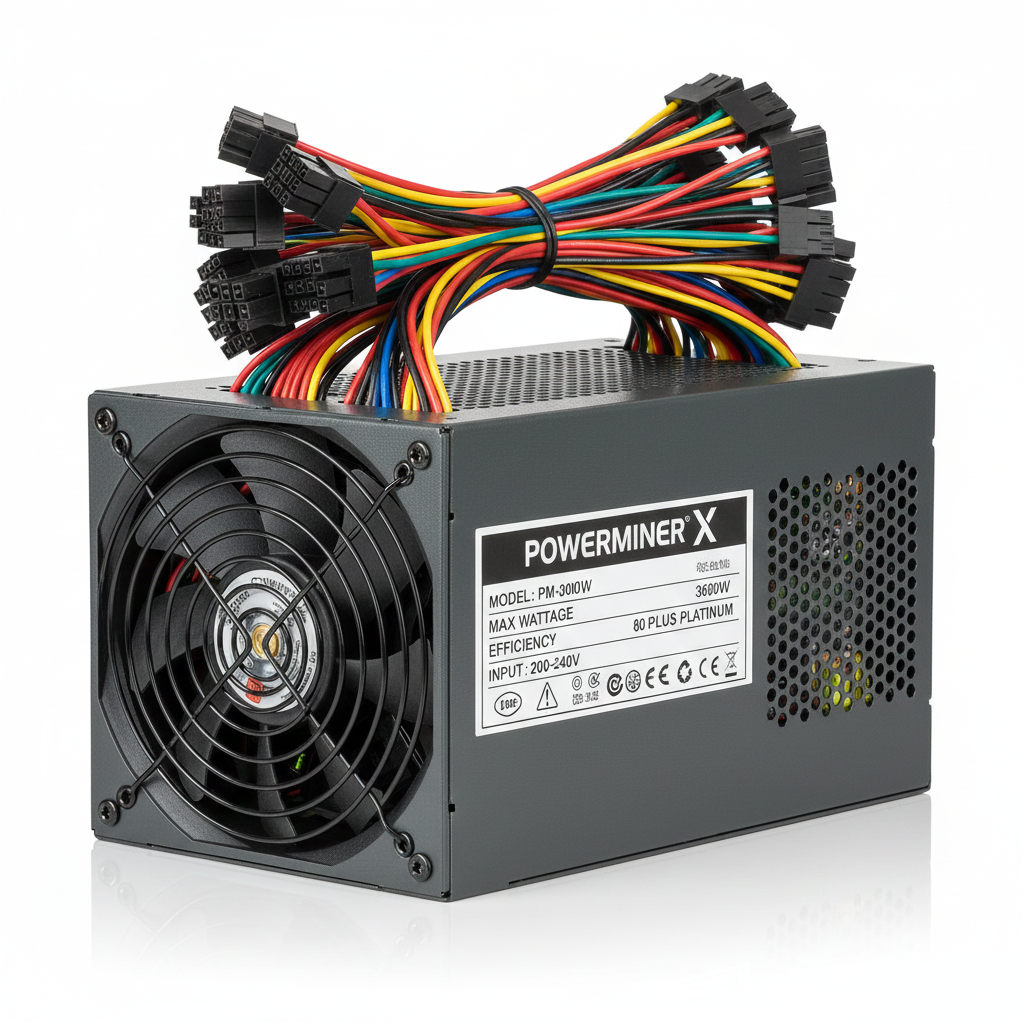
Always use power supplies meeting manufacturer specifications with 20% headroom above rated power consumption. A 3,000W miner should use a 3,600W+ power supply for optimal stability.

4. Network Connectivity and Pool Selection
Internet connection quality affects your effective hashrate to the mining pool:
Network Issues:
- High latency (>100ms) increases rejected shares
- Packet loss causes communication failures
- Intermittent connectivity wastes hash computations
- Geographic distance to pool servers adds latency
Choose mining pool servers geographically close to your location. The difference between 20ms and 150ms latency can affect your effective hashrate by 2-3% through increased stale shares.
5. Firmware and Configuration
Stock firmware from manufacturers is optimized for stability, not maximum performance. Custom firmware options can improve hashrate:
Firmware Optimization:
- Voltage tuning: Reduces power consumption or increases hashrate
- Frequency adjustment: Overclocking boosts performance
- Per-chip optimization: Balances performance across all ASIC chips
- Auto-tuning: Dynamically adjusts settings based on conditions
Custom firmware like Braiins OS+ can improve efficiency by 10-20%, though it requires technical knowledge and may void warranties. For beginners learning how to start mining at home, stick with stock firmware until gaining experience.
Calculating Expected Earnings Based on Hashrate
Understanding how to project earnings from your hashrate is essential for evaluating mining profitability and making informed equipment decisions.
Basic Profitability Calculation
Step 1: Determine Your Share of Network Rewards
Your Daily Block Reward Share = (Your Hashrate ÷ Network Hashrate) × Daily Blocks × Block Reward

Example for 140 TH/s Bitcoin Miner:
= (140 TH/s ÷ 600,000,000 TH/s) × 144 blocks × 3.125 BTC
= 0.00000000023 × 450 BTC
= 0.0001035 BTC per day
Step 2: Calculate Gross Revenue
Daily Revenue = Daily BTC × BTC Price

Example at $95,000/BTC:
= 0.0001035 BTC × $95,000
= $9.83 per day
Step 3: Subtract Operating Costs
Daily Electricity Cost = (Power Consumption in kW × 24 hours × Rate per kWh)

Example for 3,010W miner at $0.12/kWh:
= (3.01 kW × 24 hours × $0.12)
= $8.67 per day
Step 4: Calculate Net Profit
Daily Profit = Daily Revenue - Daily Electricity Cost - Pool Fees

Example:
= $9.83 - $8.67 - $0.20 (2% pool fee)
= $0.96 per day
= $350 per year
This simplified example demonstrates why energy efficiency has become paramount in 2025—with block rewards halved and difficulty increasing, profit margins are razor-thin.
Using Mining Calculators
Manual calculations become tedious when modeling different scenarios. The Mining Watchdog calculator automates these computations using real-time data:
Calculator Inputs:
- Your equipment’s hashrate
- Power consumption
- Electricity rate
- Pool fees
Calculator Outputs:
- Estimated daily/monthly/yearly earnings
- Profitability after costs
- ROI period
- Break-even electricity rate
Run scenarios with different hashrates, electricity costs, and cryptocurrency prices to understand profitability sensitivity. Conservative projections assume Bitcoin price stability and 3-5% monthly difficulty increases.
Optimizing Your Mining Hashrate
Maximizing hashrate while controlling costs is essential for profitable mining operations in 2025’s competitive environment.
1. Maintain Optimal Operating Conditions
Temperature Management:
- Maintain ambient temperature below 25°C (77°F)
- Ensure adequate airflow across all ASIC chips
- Clean dust from heat sinks and fans monthly
- Monitor chip temperatures continuously
- Install intake and exhaust ventilation
Poor cooling is the leading cause of reduced hashrate in home mining operations.
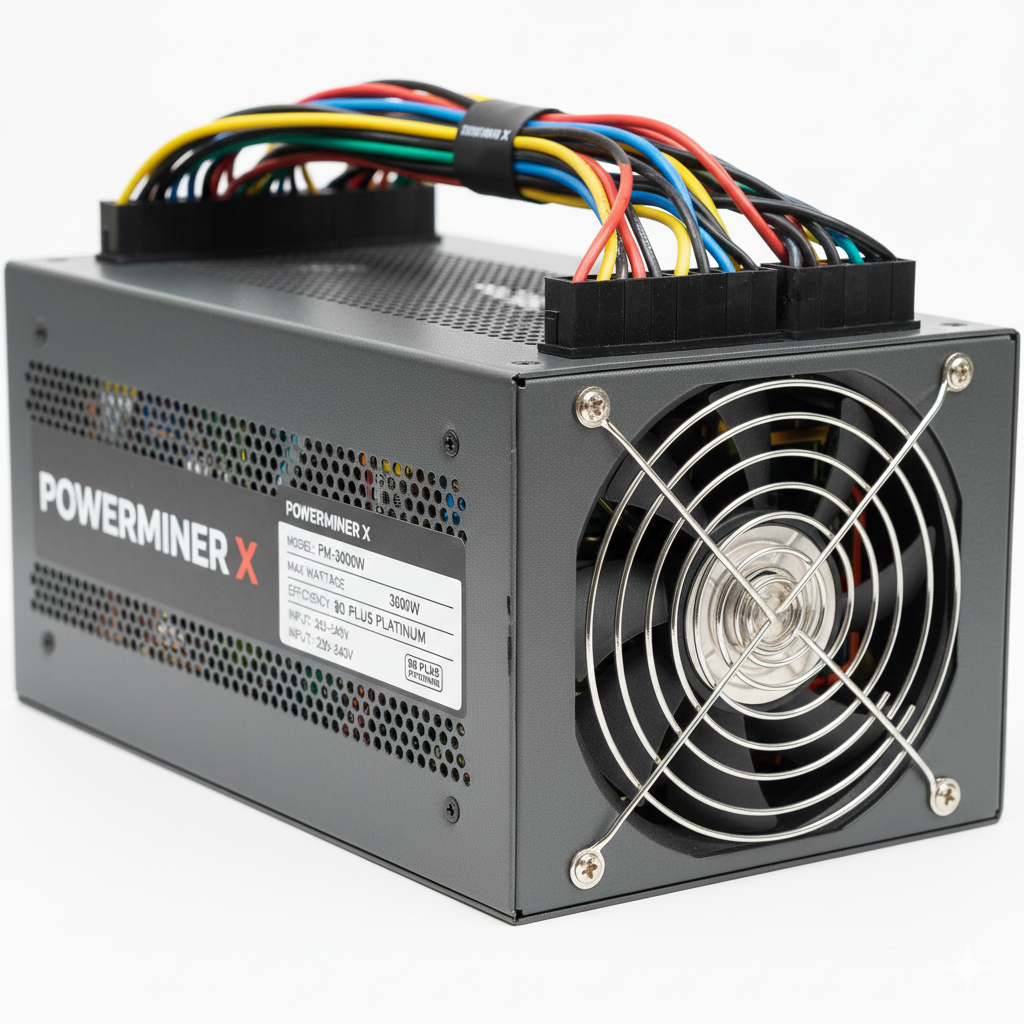
2. Optimize Power Supply
Power Quality Improvements:
- Use dedicated circuits for mining equipment
- Install surge protection
- Ensure proper voltage (220V for most Bitcoin ASICs)
- Use quality power cables rated for continuous high-amperage
- Consider UPS for power consistency
Stable, clean power enables ASIC chips to operate at maximum efficiency without throttling or error rates.
3. Minimize Network Latency
Connectivity Optimization:
- Use wired Ethernet (never WiFi for serious mining)
- Select mining pool servers in your geographic region
- Monitor pool statistics for stale/rejected share rates
- Configure backup pool addresses for failover
- Ensure adequate Internet bandwidth (10+ Mbps)
While Internet speed is less critical than reliability, consistent low-latency connections maximize your effective hashrate.
4. Fine-Tune Firmware Settings
Advanced Optimization (for experienced miners):
- Experiment with frequency and voltage settings
- Use auto-tuning features if available
- Monitor per-chip performance
- Balance hashrate vs. power consumption
- Keep firmware updated for bug fixes and optimizations
Document all changes and monitor stability for 24-48 hours before considering adjustments permanent.
5. Strategic Equipment Selection
Prioritize Efficiency Over Raw Hashrate:
When comparing equipment, consider hashrate per watt rather than absolute hashrate:
Efficiency = Power Consumption ÷ Hashrate

Example 1: Antminer S19 XP
= 3,010W ÷ 140 TH/s
= 21.5 J/TH

Example 2: Older Antminer S9
= 1,350W ÷ 13.5 TH/s
= 100 J/TH
The S19 XP produces 4.7× better efficiency, making it viable at electricity rates where the S9 is unprofitable. Review current market trends and top mining equipment before making purchase decisions.
Common Hashrate Problems and Solutions
Even experienced miners encounter hashrate issues. Identifying and resolving problems quickly minimizes lost mining time.
Problem: Hashrate Lower Than Specifications
Potential Causes:
- Thermal throttling due to poor cooling
- Inadequate power supply
- Failing ASIC chips
- Network connectivity issues
- Incorrect firmware configuration
Diagnostic Steps:
- Check operating temperatures—should be below 75°C
- Verify power supply voltage and wattage capacity
- Test individual hash boards if possible
- Check pool dashboard for connection stability
- Review firmware logs for error messages
Solutions:
- Improve ventilation and reduce ambient temperature
- Replace undersized power supply
- RMA failing hardware if under warranty
- Optimize network connection
- Restore factory firmware if custom firmware causing issues
Problem: Inconsistent or Fluctuating Hashrate
Potential Causes:
- Variable temperature conditions
- Power supply voltage fluctuations
- Network latency spikes
- Overclocking instability
- Hardware beginning to fail
Solutions:
- Install temperature monitoring with alerts
- Use dedicated circuit with stable voltage
- Switch to lower-latency pool server
- Reduce overclock settings for stability
- Run hardware diagnostics to identify failing components
Problem: High Rejected Share Rate
Rejected shares represent wasted computational effort—your miner calculated valid hashes but the pool didn’t accept them:
Acceptable Rates: 1-3% rejected shares Problematic Rates: Above 5% indicates issues
Common Causes:
- Excessive network latency to pool servers
- System time not synchronized correctly
- Outdated firmware
- Hardware errors in hash computation
Solutions:
- Choose pool servers with <50ms latency
- Ensure system clock is synchronized (NTP)
- Update to latest firmware version
- Run hardware diagnostics for chip failures
Problem: Hashrate Drops Over Time
Gradual hashrate degradation over months or years is normal:
Expected Degradation: 5-10% over 2-3 years Excessive Degradation: >10% in first year
Prevention:
- Maintain optimal operating temperatures
- Regular cleaning and maintenance
- Avoid frequent power cycling
- Use quality power supply
- Monitor for early warning signs
If hashrate drops suddenly (>10% in days), suspect hardware failure requiring professional diagnosis or RMA.
Hashrate and ROI: Setting Realistic Expectations
Understanding the relationship between hashrate and return on investment helps set appropriate expectations for mining profitability in 2025.
ROI Calculation Based on Hashrate
Standard ROI Formula:
ROI Period (days) = Initial Investment ÷ Daily Net Profit

Example: Antminer S19 XP at 140 TH/s
Initial Cost: $4,000
Daily Profit: $1.50 (after electricity at $0.12/kWh)
ROI Period: $4,000 ÷ $1.50 = 2,667 days (7.3 years)
This sobering calculation reflects post-halving realities—ROI periods have extended dramatically. However, this assumes:
- Constant Bitcoin price
- Steady difficulty increases
- No hardware degradation
- Consistent electricity costs
In practice, Bitcoin price volatility can dramatically improve or worsen ROI. A 50% Bitcoin price increase cuts ROI period in half, while a 50% decrease doubles it.
Hashrate Depreciation
Mining equipment loses value as newer, more efficient models release:
Depreciation Factors:
- More efficient hardware increases difficulty
- Your relative network share decreases
- Used equipment resale value declines
- Hardware warranty expires
Plan for equipment replacement every 2-3 years to maintain competitive efficiency. Include this in your total cost analysis—mining is an ongoing investment, not a one-time purchase.
Is Mining Still Profitable?
The question “Is Bitcoin mining still profitable in 2025?” depends entirely on your specific situation:
Profitable Scenarios:
- Electricity costs below $0.08/kWh
- Access to latest-generation efficient hardware
- Adequate cooling and infrastructure
- Long-term investment perspective
- Understanding of cryptocurrency markets
Unprofitable Scenarios:
- Electricity costs above $0.15/kWh
- Older, inefficient equipment
- Inadequate technical knowledge
- Need for quick returns
- No tolerance for cryptocurrency volatility
Use realistic calculations with conservative assumptions before committing capital to mining equipment.
Conclusion: Hashrate as the Foundation of Mining Success
Hashrate is far more than a technical specification on mining equipment—it’s the fundamental metric determining your competitive position in the global mining ecosystem. Every aspect of mining profitability traces back to hashrate:
- Your share of network rewards is proportional to your hashrate
- Operating costs scale with power consumption per unit of hashrate (efficiency)
- Equipment value deteriorates as newer hardware delivers better hashrate per watt
- Long-term viability requires maintaining competitive hashrate through upgrades
The mining landscape in 2025 rewards those who thoroughly understand hashrate dynamics. Successful miners:
Think strategically about hashrate efficiency rather than focusing solely on raw computational power. A miner producing 140 TH/s at 21.5 J/TH will outlast equipment producing 160 TH/s at 35 J/TH as difficulty increases and margins compress.
Monitor continuously to ensure their hardware maintains rated hashrate. Temperature problems, power issues, or connectivity failures that reduce hashrate below specifications directly reduce profitability.
Plan for the future, recognizing that network hashrate growth is constant. Equipment that’s profitable today may become marginal within 12-18 months as difficulty increases and more efficient hardware enters the market.
Optimize relentlessly, understanding that small improvements in hashrate efficiency compound over time. Reducing rejected shares by 1%, improving cooling to prevent thermal throttling, or fine-tuning firmware settings can add hundreds of dollars annually to profitability.
Before purchasing mining equipment, run comprehensive projections using the Mining Watchdog calculator with your specific electricity costs and hashrate targets. Model scenarios with increasing difficulty and variable Bitcoin prices to understand profitability ranges.
Remember that mining is fundamentally a bet on cryptocurrency’s long-term value. Your hashrate determines how much cryptocurrency you accumulate, but the ultimate value of those holdings depends on market conditions beyond your control.
For those committed to mining in 2025, hashrate understanding is non-negotiable. Master this fundamental concept, choose equipment strategically, optimize operations continuously, and maintain realistic expectations about returns. Success in mining requires both technical competence and business acumen—hashrate knowledge provides the foundation for both.
Calculate your potential mining returns using different hashrate scenarios with our cryptocurrency mining calculator. Explore equipment comparisons and current mining trends at Mining Watchdog.
