
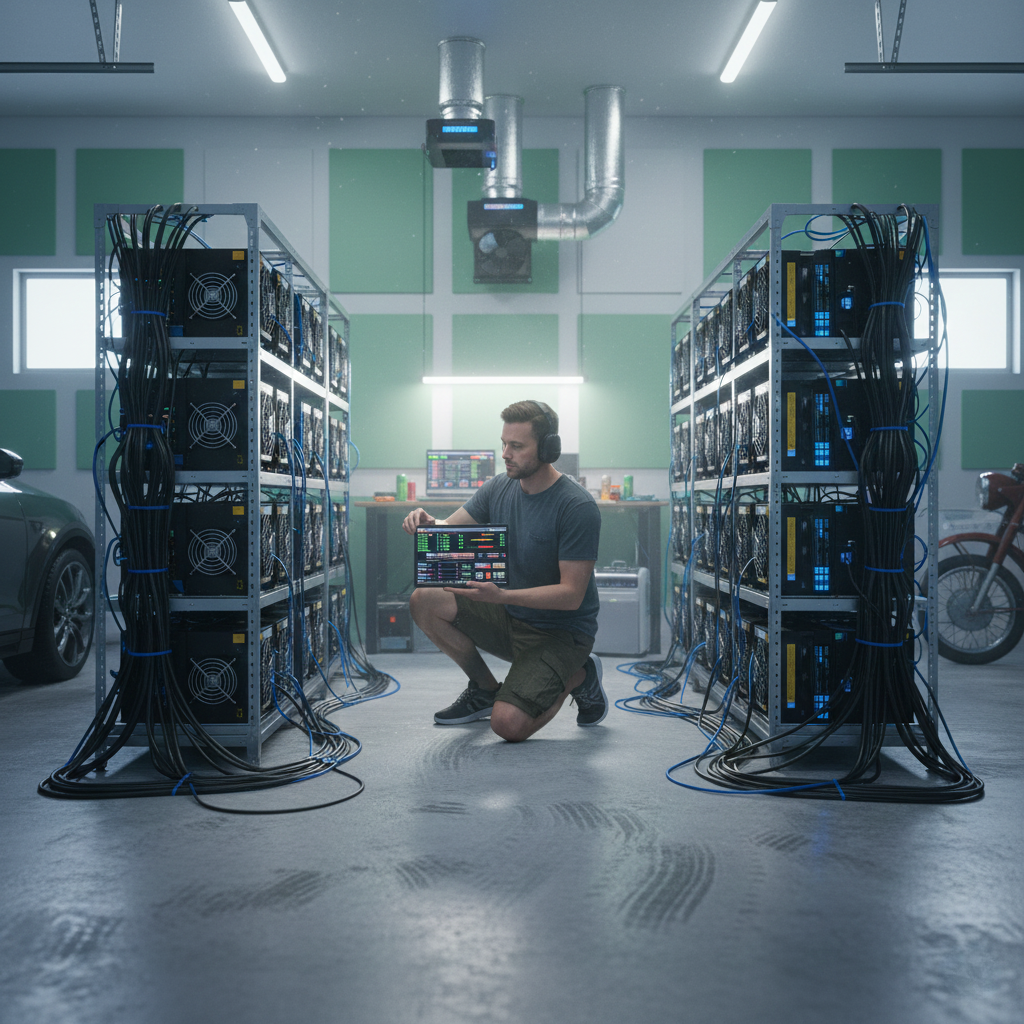
The cryptocurrency mining landscape has undergone significant transformation following Bitcoin’s 2024 halving event. For home miners, the path to profitability now hinges almost entirely on one critical factor: energy efficiency. With block rewards cut in half and electricity costs representing up to 70% of operational expenses, choosing the right ASIC miner is no longer just about raw hashrate—it’s about maximizing every watt of power consumed.
This comprehensive guide examines the best ASIC miners for home mining in 2025, with a laser focus on energy efficiency, noise levels, and real-world profitability in residential settings.
Understanding Energy Efficiency in Mining
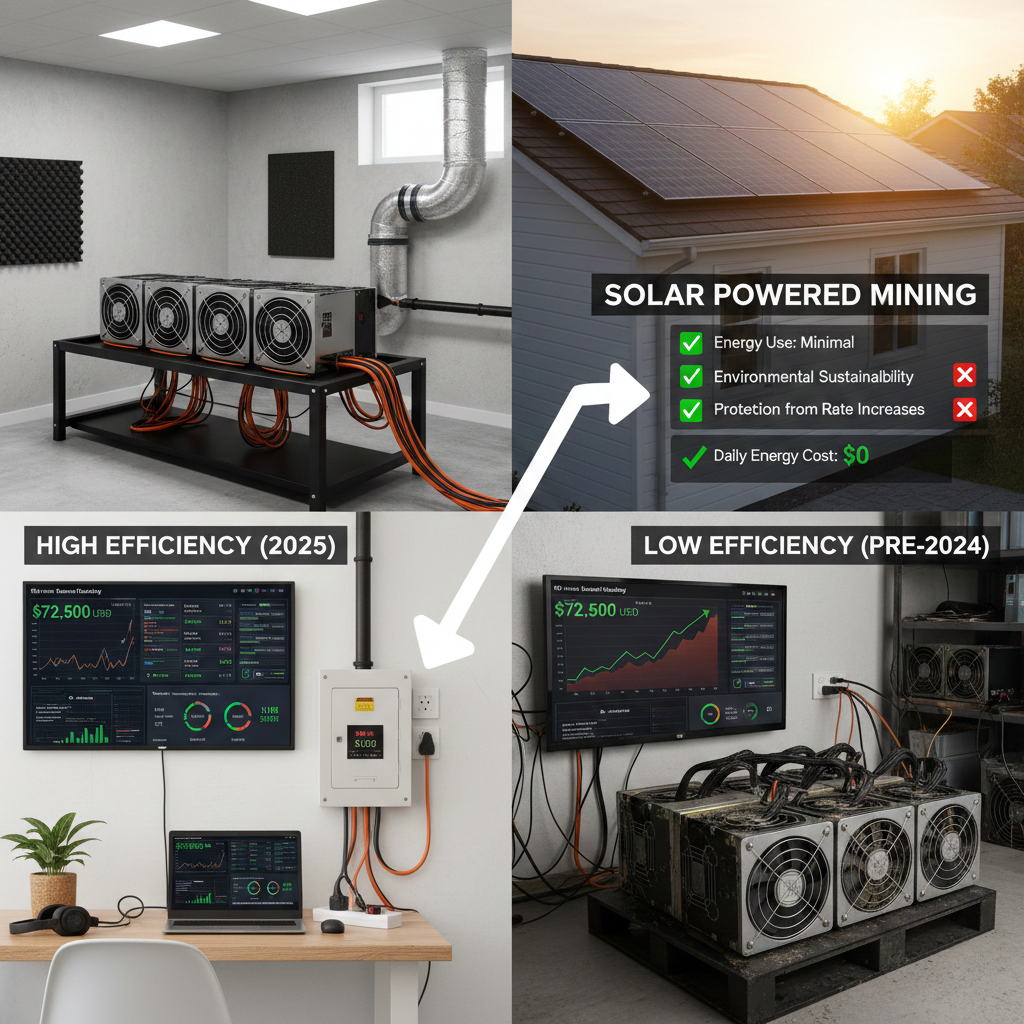
Energy efficiency in cryptocurrency mining is measured in joules per gigahash (J/GH) or joules per terahash (J/TH). This metric tells you how much electrical energy is required to produce one unit of hashing power. Lower numbers indicate better efficiency—meaning you’re getting more computational power for every watt of electricity consumed.
After the 2024 Bitcoin halving, miners with poor efficiency ratios have been forced offline, making energy optimization the primary survival strategy. For home miners competing against industrial operations, efficiency isn’t optional—it’s essential.
Top Energy-Efficient ASIC Miners for Home Mining
Bitcoin Mining: SHA-256 Algorithm
1. Bitmain Antminer S19 XP (140 TH/s)
The Antminer S19 XP represents the cutting edge of home mining technology in 2025. This miner strikes an impressive balance between performance and residential feasibility.
Key Specifications:
- Hash Rate: 140 TH/s
- Power Consumption: 3,010W
- Energy Efficiency: 21.5 J/TH
- Noise Level: 75 dB
- Mineable Coins: 39 (Bitcoin, Bitcoin Cash, Peercoin)
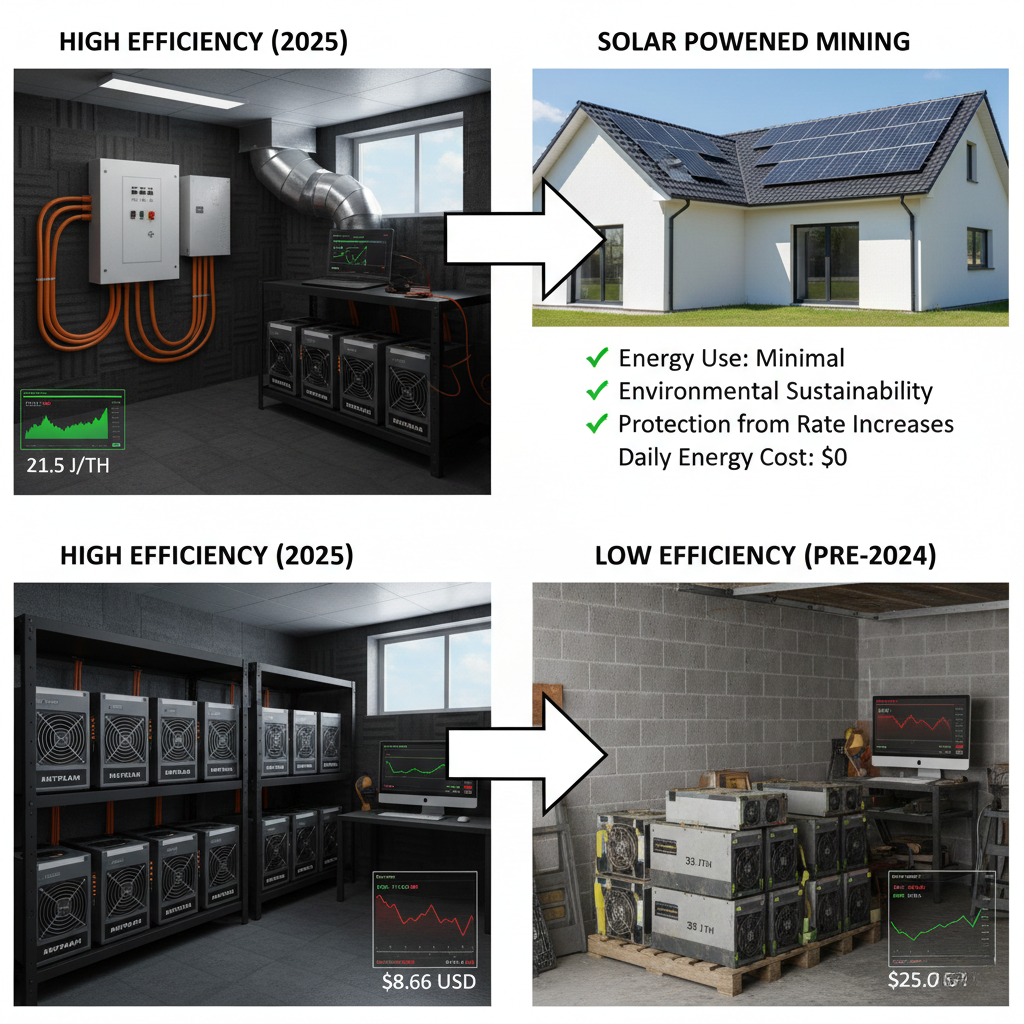
Energy Analysis: At 21.5 J/TH, the S19 XP delivers exceptional efficiency for a high-performance unit. With residential electricity rates averaging $0.12 per kWh in the United States, this miner consumes approximately $8.66 worth of electricity daily. The four-fan cooling system maintains optimal operating temperatures while keeping noise within acceptable ranges for home use.
Profitability Outlook: Based on current network difficulty and Bitcoin prices, the S19 XP can generate approximately $37 in daily revenue after electricity costs. The ROI period sits around 12-14 months under stable market conditions—reasonable for a home mining operation.
2. Bitmain Antminer S19 Pro (110 TH/s)
The Antminer S19 Pro has proven itself as a reliable workhorse for home miners who prioritize proven technology over bleeding-edge specifications.
Key Specifications:
- Hash Rate: 110 TH/s
- Power Consumption: 3,250W
- Energy Efficiency: 29.5 J/TH
- Noise Level: 75 dB
- Operating Temperature: 5-40°C
Energy Analysis: While not as efficient as the S19 XP, the S19 Pro’s 29.5 J/TH efficiency rating remains competitive in 2025. The miner draws 3,250W continuously, translating to approximately $9.36 in daily electricity costs at average rates. The second-generation 7nm BM1397 chip architecture ensures stable, efficient operations.
Home Mining Considerations: The S19 Pro’s moderate noise level of 75 dB makes it suitable for dedicated mining spaces in residential settings. The unit requires adequate ventilation but doesn’t demand industrial-grade cooling infrastructure, making it ideal for garage or basement installations.
3. Bitmain Antminer S19 (95 TH/s)
For budget-conscious home miners, the Antminer S19 95TH offers an entry point into profitable Bitcoin mining without requiring maximum upfront investment.
Key Specifications:
- Hash Rate: 95 TH/s
- Power Consumption: 3,250W
- Energy Efficiency: 34.2 J/TH
- Noise Level: 75 dB
- Weight: 14.2 kg
Energy Analysis: At 34.2 J/TH, the S19 95TH represents the upper limit of viable efficiency for post-halving profitability. The unit’s power consumption matches the S19 Pro at 3,250W, but produces less hashrate, resulting in slightly lower efficiency. However, the reduced purchase price creates a more accessible entry point for new home miners.
ROI Considerations: With an estimated 360-day period to mine 1 Bitcoin, the S19 95TH offers predictable returns. The manufacturer backs this confidence with a 149-day payback period estimate, assuming stable electricity costs around $0.10 per kWh.
4. Bitmain Antminer T19 (84 TH/s)
The Antminer T19 serves as the budget option in the Antminer 19 series, offering acceptable efficiency at a lower price point.
Key Specifications:
- Hash Rate: 84 TH/s
- Power Consumption: 3,150W
- Energy Efficiency: 37.5 J/TH
- Noise Level: 75 dB
- Cooling: 4 fans
Energy Analysis: While the T19’s efficiency trails the premium S19 models, it remains viable for home miners with access to low-cost electricity. The 3,150W power draw is slightly lower than higher-end models, potentially saving marginal costs while sacrificing some performance. This miner makes the most sense in regions where electricity costs fall below $0.08 per kWh.
Alternative Cryptocurrency Mining
5. Goldshell Mini-DOGE Pro (Scrypt Algorithm)
For home miners interested in diversifying beyond Bitcoin, the Goldshell Mini-DOGE Pro offers compelling efficiency for Litecoin and Dogecoin mining.
Key Specifications:
- Hash Rate: 205 MH/s
- Power Consumption: 220W
- Energy Efficiency: 1.073 J/MH
- Noise Level: Low (suitable for residential)
- Mineable Coins: 30 (including Litecoin, Dogecoin)
Energy Analysis: The Mini-DOGE Pro’s 220W power consumption makes it exceptionally friendly for home environments. At less than $1 per day in electricity costs, this miner can operate continuously without significantly impacting household power bills. The compact design and low noise output allow for placement in shared living spaces.
Profitability Perspective: While Dogecoin and Litecoin don’t match Bitcoin’s market capitalization, the reduced electricity costs and lower barrier to entry create viable profit opportunities. The Scrypt algorithm’s resistance to extreme competition means this miner can maintain profitability longer than expected.
Energy Efficiency Comparison Table
| Miner Model | Hash Rate | Power (W) | Efficiency | Daily Energy Cost* | Noise (dB) | Best For |
|---|---|---|---|---|---|---|
| Antminer S19 XP 140TH | 140 TH/s | 3,010 | 21.5 J/TH | $8.66 | 75 | Maximum efficiency |
| Antminer S19 Pro 110TH | 110 TH/s | 3,250 | 29.5 J/TH | $9.36 | 75 | Balanced performance |
| Antminer S19 95TH | 95 TH/s | 3,250 | 34.2 J/TH | $9.36 | 75 | Budget Bitcoin mining |
| Antminer T19 84TH | 84 TH/s | 3,150 | 37.5 J/TH | $9.07 | 75 | Entry-level option |
| Goldshell Mini-DOGE Pro | 205 MH/s | 220 | 1.073 J/MH | $0.63 | Low | Altcoin diversification |
*Based on $0.12 per kWh residential rate
Critical Factors for Home Mining Success
1. Electricity Cost Analysis
Your electricity rate is the single most important variable in home mining profitability. Before purchasing any equipment, calculate your true cost per kilowatt-hour, including all fees and surcharges. Use the Mining Watchdog calculator to model different scenarios based on your specific rates.
Break-even Points by Electricity Cost:
- $0.06/kWh: Most ASIC miners remain profitable
- $0.10/kWh: Only efficient models (below 30 J/TH) maintain margins
- $0.15/kWh: Premium efficiency required (below 25 J/TH)
- $0.20/kWh: Home mining generally unprofitable
2. Cooling and Ventilation Requirements
ASIC miners generate substantial heat—3,000+ watts of power consumption equals roughly 10,000 BTUs of heat output. Home mining requires:
Essential Cooling Infrastructure:
- Dedicated ventilation system with intake and exhaust
- Ambient temperature control (ideally below 25°C)
- Air filtration to prevent dust accumulation
- Adequate spacing for airflow (minimum 6 inches on all sides)
Miners operating in hot environments experience reduced efficiency and accelerated hardware degradation. Factor climate control costs into your profitability calculations.
3. Noise Management
At 75 dB, most Bitcoin ASIC miners produce noise comparable to a vacuum cleaner running continuously. Successful home mining requires noise mitigation:
Practical Solutions:
- Soundproof enclosures with acoustic foam
- Basement or garage installation away from living spaces
- White noise generators to mask fan sounds
- Schedule mining during off-peak hours if noise is problematic
The Goldshell Mini-DOGE Pro’s quieter operation makes it suitable for apartments or shared living situations where Bitcoin miners would be disruptive.
4. Electrical Infrastructure
Bitcoin ASIC miners require 220V power supply for optimal operation. Most U.S. homes have 220V available for dryers and stoves, but may require electrical work:
Infrastructure Requirements:
- Dedicated 20-30 amp circuit
- Proper gauge wiring (12-10 AWG depending on amperage)
- GFCI protection in damp environments
- Professional electrician consultation recommended
Improper electrical setup creates fire hazards and can damage expensive mining equipment. Budget $300-800 for professional electrical preparation.
Post-Halving Profitability Reality
The 2024 Bitcoin halving fundamentally changed home mining economics. With block rewards reduced from 6.25 BTC to 3.125 BTC, only the most efficient operations remain profitable.
Current Profitability Drivers:
- Network difficulty: Continues rising as inefficient miners exit
- Bitcoin price: Remains the primary variable in revenue calculations
- Transaction fees: Increasingly important revenue component
- Energy costs: Now representing 60-70% of operational expenses
Home miners must accept longer ROI periods and thinner margins compared to the pre-halving era. The days of rapid returns have passed—sustainable mining now requires patience, efficiency, and strategic planning.
Strategic Recommendations for Home Miners
For Maximum Profitability
If you have access to electricity rates below $0.10/kWh and can manage noise/heat, the Antminer S19 XP 140TH offers the best efficiency-to-performance ratio. Its 21.5 J/TH efficiency ensures competitiveness as network difficulty continues rising.
For Balanced Approach
Home miners seeking proven reliability should consider the Antminer S19 Pro 110TH. Its established track record, widespread availability, and reasonable efficiency create a dependable foundation for long-term operations.
For Budget-Conscious Entry
The Antminer S19 95TH provides the minimum viable efficiency for post-halving profitability while requiring lower upfront investment. This option suits miners testing the waters before committing to premium equipment.
For Apartment/Shared Living
The Goldshell Mini-DOGE Pro enables cryptocurrency mining in noise-sensitive environments. While Dogecoin and Litecoin don’t match Bitcoin’s prestige, the low operational costs and minimal infrastructure requirements make it a practical choice for space-constrained situations.
Energy Optimization Strategies
1. Time-of-Use Rate Exploitation
Many utilities offer time-of-use (TOU) pricing with lower rates during off-peak hours. Miners with variable rate structures can maximize profitability by:
- Running miners intensively during low-rate periods
- Reducing operations during peak-rate hours
- Automating power management based on rate schedules
This strategy works best with lower-power miners like the Goldshell Mini-DOGE Pro, where intermittent operation doesn’t significantly impact hardware longevity.
2. Firmware Optimization
Custom firmware solutions like Braiins OS can improve energy efficiency by:
- Fine-tuning voltage and frequency settings
- Reducing power consumption by 5-15%
- Improving chip-level efficiency
- Enabling per-chip performance monitoring
Advanced miners can underclock high-power units to improve efficiency ratios, trading modest hashrate reductions for significant power savings.
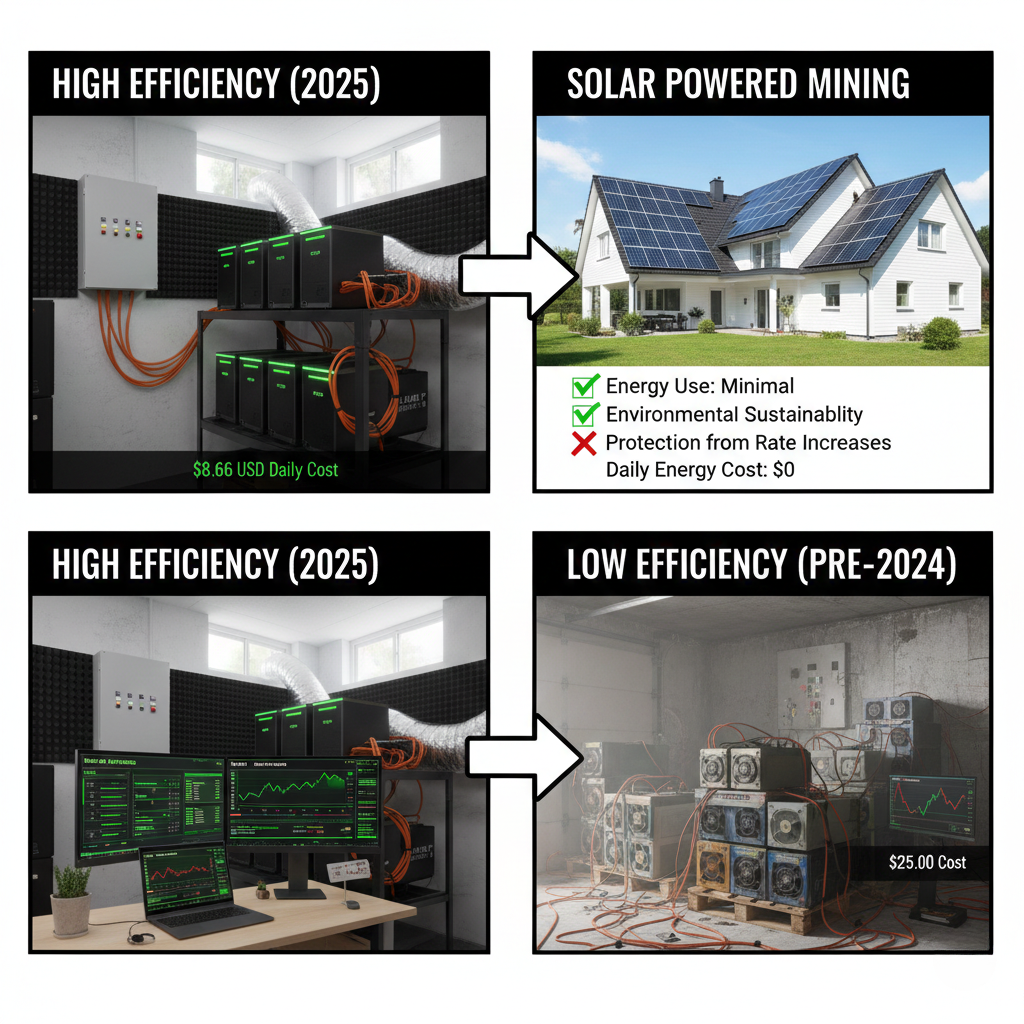
3. Renewable Energy Integration
Home miners with solar panels or other renewable energy sources gain substantial advantages:
- Reduced or eliminated electricity costs during production hours
- Environmental sustainability
- Potential net metering benefits
- Protection against utility rate increases
Solar integration requires upfront investment but can transform mining profitability in sunny regions. A 5kW solar array can support one Antminer S19-class miner during peak production hours.
Common Home Mining Mistakes to Avoid
1. Underestimating Total Power Costs
Many new miners calculate profitability using only the miner’s rated power consumption, forgetting that:
- Cooling systems add 20-30% to power draw
- Power supply inefficiency wastes 5-10% of energy
- Environmental climate control increases total consumption
Always multiply your miner’s rated wattage by 1.3-1.4 when calculating true electricity costs.
2. Ignoring Network Difficulty Increases
Bitcoin’s mining difficulty adjusts every 2,016 blocks (approximately two weeks) to maintain 10-minute block times. As more efficient hardware joins the network, difficulty rises, reducing your miner’s relative output. Factor in 3-5% monthly difficulty increases when projecting long-term profitability.
3. Overestimating Hardware Longevity
ASIC miners have finite operational lifespans, typically 2-4 years of continuous operation before:
- Chip degradation reduces performance
- Cooling systems fail
- Newer, more efficient models obsolete older equipment
Plan for hardware replacement costs in your financial modeling. The state of crypto mining in 2025 shows accelerating technology advancement, shortening equipment relevance windows.
4. Inadequate Thermal Management
Excess heat kills mining hardware. Operating temperatures above manufacturer specifications:
- Reduce chip efficiency by 2-3% per 5°C increase
- Accelerate component wear
- Increase failure rates
- Void warranties
Invest in proper cooling infrastructure from day one. Saving money on ventilation costs will be far more expensive in hardware replacement and lost mining time.
Choosing the Right Mining Pool
Even the most efficient hardware generates minimal returns without proper mining pool selection. Key factors include:
Pool Characteristics:
- Fee structure (typical range: 1-3%)
- Payment method (PPS, PPLNS, or hybrid)
- Minimum payout thresholds
- Geographic server locations
- Historical uptime and reliability
Established pools like AntPool, F2Pool, SlushPool, and ViaBTC offer proven reliability for Bitcoin mining. For alternative cryptocurrencies, research pool options specific to your target coins.
Tax Implications of Home Mining
Cryptocurrency mining creates tax obligations in most jurisdictions:
Tax Considerations:
- Mined coins considered taxable income at fair market value upon receipt
- Equipment depreciation may be deductible
- Electricity costs potentially deductible as business expenses
- Additional self-employment tax may apply
Consult with a tax professional familiar with cryptocurrency to ensure compliance and optimize deductions. Proper documentation of all expenses and mining revenue is essential for accurate tax reporting.
Future-Proofing Your Home Mining Operation
The mining landscape continues evolving rapidly. Future-proof your operation by:
1. Prioritizing Efficiency Over Hashrate
A miner producing 100 TH/s at 25 J/TH will outlast a 120 TH/s unit at 35 J/TH as network difficulty rises. Efficiency determines longevity in competitive mining environments.
2. Maintaining Upgrade Flexibility
Purchase equipment with strong resale markets. Bitmain Antminer products maintain residual value, allowing strategic upgrades to newer generations without total capital loss.
3. Diversifying Mining Portfolio
Consider splitting resources between Bitcoin and alternative cryptocurrency mining. The Goldshell Mini-DOGE Pro’s low operational costs provide consistent returns even during Bitcoin profitability dips.
4. Monitoring Technology Advancements
The next generation of ASIC technology promises even greater efficiency improvements. Stay informed about upcoming releases that might justify equipment upgrades before your current hardware becomes obsolete.
Conclusion: Making the Home Mining Decision
Energy efficiency has become the defining characteristic separating profitable home miners from those subsidizing the network at a loss. In 2025’s post-halving environment, only miners achieving energy efficiency ratios below 30 J/TH can maintain sustainable operations at average residential electricity rates.
The Bitmain Antminer S19 XP stands as the premier choice for home miners with adequate infrastructure and favorable electricity rates. Its industry-leading 21.5 J/TH efficiency ensures competitive operation as mining difficulty continues rising.
For those seeking proven reliability with slightly lower upfront costs, the Antminer S19 Pro delivers dependable performance with acceptable efficiency. Budget-conscious miners might consider the Antminer S19 95TH, though reduced efficiency limits its viability in high-cost electricity regions.
Alternative cryptocurrency miners like the Goldshell Mini-DOGE Pro serve niche purposes for apartment dwellers and those seeking diversification beyond Bitcoin. Lower operational costs and minimal infrastructure requirements make Scrypt mining accessible to broader audiences.
Before committing capital to home mining equipment, rigorously calculate your specific profitability using the Mining Watchdog calculator. Input your actual electricity rates, account for cooling costs, and model various Bitcoin price scenarios. Only proceed if projections show clear profitability with reasonable ROI periods.
Home mining in 2025 demands more sophistication than previous eras. Success requires careful equipment selection, operational excellence, and realistic expectations about returns. Energy efficiency isn’t just a specification—it’s the fundamental determinant of whether your home mining operation generates profit or simply converts electricity into heat.
Choose wisely, optimize relentlessly, and remember that in post-halving mining, every watt counts.
Calculate your mining profitability with current difficulty and energy costs using our cryptocurrency mining calculator. Stay updated on the latest mining trends and hardware comparisons at Mining Watchdog.
